USDT is designed to make moving digital value relatively simple, but that doesn't mean every payment service can receive it directly.
This becomes noticeable when someone holds USDT in a crypto wallet and wants to use that value through Venmo.
The two systems serve different purposes. USDT operates as a cryptocurrency on blockchain networks, while Venmo is a digital payment service built around everyday money transfers and payments.
So when someone searches for USDT to Venmo, what they're usually looking for isn't a way to send a stablecoin directly to a Venmo account. They're looking for a practical way to convert USDT and move the resulting value toward Venmo.
That distinction is important because it changes how the whole process should be approached.
Why Would Someone Want to Move USDT to Venmo?
USDT is popular because its value is designed to stay close to the U.S. dollar while remaining transferable on blockchain networks.
For someone already holding USDT, however, there may come a point when keeping the stablecoin isn't the objective.
Perhaps the funds came from freelance work. Maybe USDT was received from another person. Or perhaps the user simply wants to turn part of a crypto balance into money that can be used through a familiar payment service.
Venmo can be attractive for everyday payments and transfers, so the idea of moving value from USDT toward Venmo is understandable.
The challenge is that USDT and Venmo don't operate on the same financial rails.
That's where a crypto conversion service can become useful.
Can You Send USDT Directly to Venmo?
This is the first thing to understand before attempting a transaction.
USDT is a blockchain-based asset. Depending on the version being used, it can exist on networks such as Tron, Ethereum and other supported blockchains.
Venmo, meanwhile, uses its own payment infrastructure.
Because of that, a USDT wallet address shouldn't simply be replaced with Venmo account information. A blockchain transfer and a Venmo payment are two different types of transactions.
A conversion route is needed when the service you are using supports the relevant USDT-to-Venmo option.
This is why checking the exact exchange pair is so important.
Just because an exchange supports USDT doesn't automatically mean that it supports Venmo as a destination. Likewise, a platform mentioning Venmo doesn't necessarily mean every cryptocurrency can be converted to it.
The specific route matters.
How a USDT-to-Venmo Conversion Can Work
The basic idea is relatively straightforward.
You start with USDT in your cryptocurrency wallet.
If a supported USDT-to-Venmo route is available, you select USDT as the asset you want to exchange and Venmo as the destination.
The exchange provides the transaction instructions, including where the USDT needs to be sent and what destination information is required.
You then send the specified USDT amount from your wallet.
Once the exchange receives and processes the cryptocurrency, the converted value is sent through the supported payment route.
The exact steps can differ depending on the service and the current availability of the pair, but the concept remains the same:
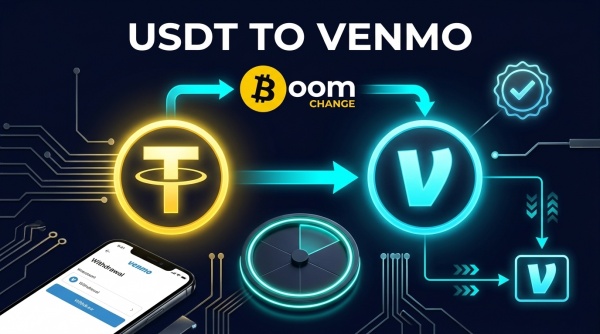
USDT → crypto conversion → Venmo destination
For users who only need to make an occasional conversion, this can be simpler than opening several accounts and moving money through multiple platforms.
You can check the current available conversion options through the Boomchange exchange platform.
The USDT Network Matters
One of the most important details when dealing with USDT is the network.
USDT isn't limited to a single blockchain. The same stablecoin name can appear across different networks, and those networks aren't interchangeable.
For example, USDT on Tron isn't the same transaction environment as USDT on Ethereum.
This means that if an exchange gives you instructions for a particular USDT network, you need to use exactly that network when sending the funds.
This is one of the most common areas where users can make mistakes.
Before confirming a transaction, check:
Which USDT network is supported
The deposit address provided by the exchange
The amount being sent
Any minimum transaction requirement
The final destination details
Never assume that because both sides say "USDT," the network automatically matches.
What Determines How Much You Receive?
The amount that eventually reaches the destination isn't necessarily a simple one-to-one calculation.
The final result can be affected by the exchange rate, transaction costs, network fees and the conditions of the selected route.
This is why looking only at a platform's advertised fee can be misleading.
Imagine two services offering to convert the same amount of USDT. One may show a lower visible fee, but the other may provide a better exchange rate and leave you with more money at the end.
The figure worth paying attention to is the final amount you are expected to receive.
Before confirming the exchange, compare the amount you're sending with the amount that will arrive.
For a small transaction, the difference may not seem significant. For a larger conversion, even a small difference in the effective rate can become noticeable.
Why USDT Can Be Convenient for This Type of Conversion
Unlike volatile cryptocurrencies such as DOGE or BTC, USDT is designed to track the value of the U.S. dollar.
That can make it convenient for users who already hold stablecoins and want to convert them into payment funds.
The value can still be affected by exchange conditions and transaction costs, but users aren't typically dealing with the same kind of price movement they might see when converting a volatile cryptocurrency.
That doesn't mean the exchange rate should be ignored.
It simply means the starting asset itself is designed to behave differently from many other cryptocurrencies.
What If the USDT-to-Venmo Route Isn't Available?
This is an important possibility.
Crypto exchanges don't necessarily support every combination of cryptocurrency and payment destination.
A service might support USDT but not Venmo. It might support Venmo for one cryptocurrency but not another. Or a particular route may temporarily be unavailable because of liquidity or payment-processing conditions.
If the direct route isn't available, some users may consider an intermediate conversion.
For example, they might exchange USDT for another supported asset before attempting to reach the desired payment destination.
However, every additional step can introduce another exchange rate, another transaction and potentially another cost.
For that reason, a direct supported route is generally easier when one is available.
The best approach is to check the exact pair before sending anything.
How Long Can a USDT Conversion Take?
The processing time depends on several factors.
The exchange itself may process the transaction relatively quickly, but the blockchain still has to confirm the USDT transfer.
Network congestion can affect this, as can the specific blockchain being used.
The payment destination can also influence the overall process.
So even when a crypto exchange advertises a relatively short processing period, users should treat that as an estimate rather than a guaranteed arrival time.
If the transaction is time-sensitive, it is better to allow some additional time instead of assuming that every exchange will complete at exactly the same speed.
Start With a Small Transaction
If you're trying a particular USDT-to-payment route for the first time, a small test transaction can be a sensible precaution.
This lets you confirm that:
The correct USDT network was selected.
The destination information was entered correctly.
The exchange process works as expected.
The final amount is what you anticipated.
The transaction arrives at the intended destination.
Once the first transaction has gone through successfully, you can decide whether you're comfortable using the same route for a larger amount.
Boomchange currently advertises a starting exchange amount of $10, which can make smaller test transactions possible on supported routes.
Mistakes That Can Cause Problems
The basic concept behind converting USDT to a payment destination isn't particularly complicated.
The details are where problems usually appear.
A user may select the wrong USDT network. Another may copy the wrong destination information. Someone else may confirm a transaction without noticing that the final amount is different from what they expected.
These mistakes are especially important with blockchain transactions because they generally can't be treated like ordinary payment transfers that can simply be canceled afterward.
Before sending USDT, take a moment to review everything.
Check the asset.
Check the network.
Check the destination.
Check the exchange rate.
Check the final amount.
Check the transaction limits.
That short checklist can prevent a much bigger problem later.
Is USDT to Venmo a Practical Option?
For someone who already owns USDT and wants to use its value through a payment service, a supported USDT-to-Venmo conversion can be a practical solution.
The main attraction is convenience.
Instead of treating the process as several unrelated financial transfers, a supported crypto conversion route can reduce the number of steps involved.
But the key word is supported.
Users should always confirm that the exact USDT network and Venmo destination are currently available before sending cryptocurrency.
If the route is available and the quoted amount, limits and processing conditions make sense, the conversion may be a reasonable option.
If it isn't available, adding unnecessary conversion steps may make the transaction more expensive and complicated than expected.
A Better Way to Think About Crypto Withdrawals
A crypto withdrawal doesn't always mean withdrawing cryptocurrency to another crypto wallet.
For many users, the real goal is to turn a digital asset into money that can be used somewhere else.
That's particularly true for stablecoins such as USDT.
The important thing is to think beyond the name of the payment service and focus on the complete transaction: the cryptocurrency, network, exchange rate, destination, fees, limits and final amount.
For users exploring different crypto-to-payment routes, the Boomchange platform provides a place to check available conversion options.
Frequently Asked Questions
Can I send USDT directly to Venmo?
Not as a standard blockchain transfer. USDT operates on blockchain networks, while Venmo uses a separate payment system. A supported conversion route is needed to move the value from USDT toward Venmo.
Does every USDT network work for a Venmo conversion?
No. USDT exists across multiple blockchain networks, and the supported network depends on the specific exchange route. Always follow the network instructions provided for your transaction.
What affects the amount I receive when converting USDT?
The exchange rate, transaction costs, network fees, liquidity and the conditions of the selected route can all affect the final amount. The most useful figure to check is the amount you are expected to receive.
How can I avoid mistakes when converting USDT?
Verify the USDT network, wallet address, destination information, exchange rate, final amount and transaction limits before sending funds. A small test transaction can also be useful when using a route for the first time.
What if USDT to Venmo isn't available?
Check whether another supported cryptocurrency-to-payment route is available. Avoid adding unnecessary conversion steps unless they make sense financially, since each additional transaction can introduce more costs and complexity.
Is USDT suitable for converting into payment funds?
USDT is commonly used for moving dollar-denominated value within the crypto ecosystem, which can make it a practical starting asset for supported payment conversions. However, the exact destination and network must always be confirmed before a transaction.