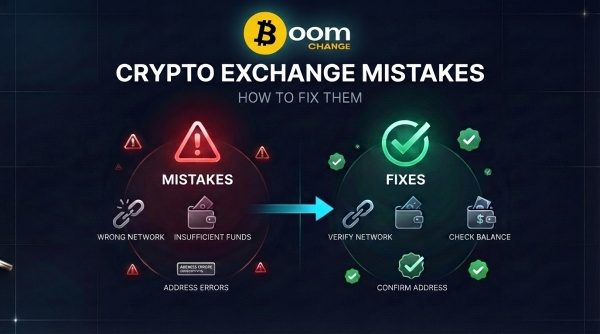
Every person who has used crypto for more than a few months has a story. The wrong network. The typo in the address. The gas fee they didn't account for. The transaction that confirmed before they realized the amount was off.
These mistakes are common because the system is unforgiving by design. Blockchain transactions are generally irreversible, and wallet interfaces do not always make the risks obvious. This guide covers seven common mistakes, what happens when they occur, and what you can do about them.
Mistake 1: Sending on the Wrong Network
What happens: You send USDT ERC-20 to an address expecting USDT TRC-20. The transaction may reach the same-looking address on Ethereum, but the receiving service is monitoring the TRON network. The funds may not be credited to your order, even if they are technically accessible through the relevant private keys.
How to fix it:
- If the destination is a self-custody wallet you control, switch to the correct network in your wallet and check whether the tokens are visible.
- If the destination is an exchange or service, contact support with your transaction hash. Recovery may be possible, but it depends on the provider and may involve a fee.
Prevention: Check the network in both your wallet and the receiving service. The asset and network must match the deposit instructions exactly.
Mistake 2: Typo in the Destination Account Details
What happens: You enter the wrong email address or payment account details. The payout may fail, be delayed, or reach another account if the incorrect details belong to someone else.
How to fix it:
- If you have not submitted the transaction, correct the details before proceeding.
- If the transaction is already processing, contact the service immediately. Support may be able to update the destination before the payout is sent. Once dispatched, recovery depends on the payment provider.
Prevention: Copy and paste account details from the intended destination, then check the complete value before confirming.
Mistake 3: Sending the Wrong Amount
What happens: You intend to convert $200 but send $2,000, or transfer 50 units of one token when you meant to send another. The number of tokens alone does not tell you their value.
How to fix it:
- If the blockchain transaction has already been broadcast, you generally cannot cancel it through your wallet.
- If you sent too much, contact the receiving service with the transaction hash and explain the error. A refund or adjustment may be possible, but it is not guaranteed.
Prevention: Check the asset name, token quantity, and estimated value before sending. This is especially important for tokens with very large supplies, where a high token count can represent a relatively small dollar amount.
Mistake 4: Missing a Required Memo or Destination Tag
What happens: You send XRP, XLM, TON, HBAR, or another asset to an exchange address without including a required memo or destination tag. The funds may arrive at the exchange's shared address, but the service cannot automatically identify which customer or order they belong to.
How to fix it:
Contact support with your transaction hash, sending address, and any required memo or tag. The exchange may have a recovery process, though it can take time and may involve a fee.
Prevention: If the deposit instructions provide a memo or destination tag, treat it as mandatory. Check that it is entered correctly before confirming the transfer.
Mistake 5: Using a Deprecated or Wrong Token Version
What happens: You send a token version that the receiving service no longer accepts. For example, an older token standard may have been replaced through a project migration, or the service may support a version on one blockchain but not another.
How to fix it:
The available recovery options depend on the token and network. Check whether the project offers an official migration process, and contact the receiving service with the transaction hash to ask whether it can recover or credit the deposit.
Prevention: Verify the exact token and blockchain network accepted by the receiving platform. Do not assume that two versions with similar names are interchangeable.
Mistake 6: Not Having Enough for Gas
What happens: You try to send ETH or an Ethereum-based token, but the transaction fails because your wallet does not have enough ETH to cover the network fee. Even when sending USDT, you may need ETH for gas if the transfer uses Ethereum.
How to fix it:
Add enough of the network's native asset to cover the estimated fee. The amount required varies with network conditions and transaction complexity, so check the fee estimate shown in your wallet rather than relying on a fixed dollar figure.
Prevention: Before transferring a token, confirm that your wallet holds enough of the correct native asset to pay the network fee.
Mistake 7: Sending to a Smart Contract Address That Can't Return Funds
What happens: You send tokens to a smart contract that has no mechanism for recovering or forwarding them. Unlike a normal wallet, a contract follows its programmed rules, and the tokens may become permanently inaccessible.
How to fix it:
Recovery is often impossible unless the contract includes a function that can return or transfer the tokens. Check the contract's documentation and contact its legitimate developer or operator if appropriate.
Prevention: Verify unfamiliar addresses before sending funds. A blockchain explorer can help identify contract addresses, but the label alone does not establish whether a transfer is safe.
The Fastest Fixes When Something Goes Wrong
- Stop. Avoid sending additional transactions in an attempt to fix the first one.
- Find the transaction hash in your wallet or exchange history.
- Check a blockchain explorer to see whether the transfer is pending, confirmed, or failed.
- Contact the relevant support team with the transaction hash, the sending and receiving addresses, and a clear description of the mistake.
- Keep records and follow up. Manual recovery can take time, and the outcome depends on the asset, network, and receiving service.
If the issue happens during a conversion, use the provider's official support channel and keep your order details available. Services such as Boomchange connect supported crypto assets with selected payment destinations, but users should always verify the chosen asset, network, amount, and payout details before submitting a transaction.
The most important rule is simple: act promptly, but provide clear information. A support request with the transaction hash and an accurate explanation is far more useful than a rushed message without the details needed to investigate.